
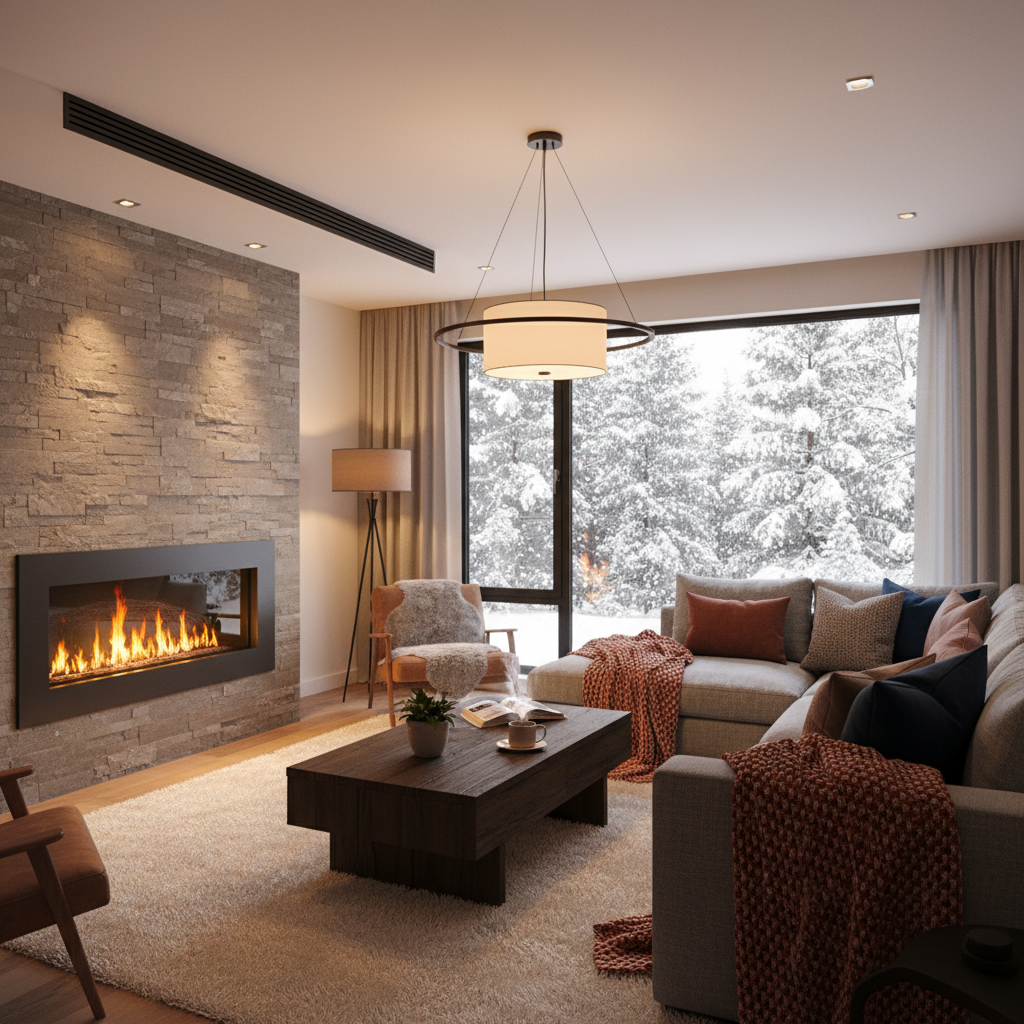
When the first cold front hits, your heating bill can jump overnight. In Texas and surrounding states, heating accounts for 20–30% of annual energy costs — and in colder regions, far more. The good news: most of that cost is preventable.
These 11 winter heating tips will keep your home warm and your wallet comfortable. Some take five minutes, others are one-time upgrades that pay back every month.
1. Set Your Thermostat to 68°F When Home, 60°F at Night
The Department of Energy recommends 68°F as the sweet spot for winter heating. It's comfortable for most people when you're active, and every degree below that saves about 3% on heating costs.
Drop the temperature to 60°F at night or when you're away — that's 8°F lower, saving roughly 24% on heating during those hours. A smart thermostat automates these setbacks so you never wake up to a cold house.
2. Schedule a Fall Furnace Tune-Up
A neglected furnace runs at 70% efficiency — wasting 30% of every heating dollar. A professional fall furnace tune-up restores efficiency and catches failures before the cold season starts.
A tune-up typically includes:
- Cleaning the heat exchanger and burners
- Testing the ignitor and flame sensor
- Checking gas pressure and combustion efficiency
- Inspecting safety controls and limits
- Replacing the air filter
Most homeowners see their heating bills drop noticeably within the first month — and the tune-up usually pays for itself within weeks.
3. Replace Your Air Filter Every 60–90 Days
A clogged air filter chokes your furnace, forcing it to run longer to push the same amount of warm air. In winter, when the system runs continuously, a dirty filter can increase energy use by 15–40%.
Check the filter monthly and replace it every 60–90 days in peak heating season. A $10 filter is the cheapest efficiency investment you'll make. Read our complete air filter guide to stay ahead.
4. Seal Air Leaks Around Windows and Doors
Heated air escapes through gaps around windows, doors, and electrical outlets — forcing your furnace to heat the outdoors. Common leakage points:
- Weatherstripping around exterior doors
- Caulking around window frames
- Foam gaskets behind outlet covers on exterior walls
- Gaps where pipes and ducts enter the home
The EPA estimates that sealing air leaks saves the average home 10–20% on heating and cooling annually. It's a weekend DIY project with permanent payback.
5. Use Ceiling Fans in Reverse
In summer, ceiling fans push air down to create a cooling breeze. In winter, reverse the direction to clockwise and run on low speed. This pushes warm air that collects at the ceiling back down into the living space.
Homes with vaulted ceilings benefit most — a reversed ceiling fan can reduce heating costs by 10% in those spaces. Don't forget to flip it back when spring arrives.
6. Open Curtains on South-Facing Windows During the Day
Solar heat gain is free heat. On sunny winter days, open curtains and blinds on south-facing windows to let the sun warm your home naturally. Close them at night to insulate against the cold.
This passive heating strategy can reduce heating demand by 5–10% on sunny days. It's free, simple, and surprisingly effective.
7. Add Attic Insulation if You Have Less Than 12 Inches
Heat rises — and an under-insulated attic lets it escape. Your attic should have 12–15 inches of insulation (R-38 to R-60 depending on climate). If yours is less, adding more is one of the best long-term investments for winter energy savings.
The EPA estimates proper attic insulation saves 10–50% on heating and cooling. The investment typically pays back within 3–5 years and continues saving for the life of the home.
8. Use a Humidifier to Feel Warmer at Lower Temperatures
Moist air feels warmer than dry air at the same temperature. Maintaining 30–50% relative humidity lets you lower the thermostat by 2–3°F without noticing a comfort difference.
A whole-home humidifier integrated with your HVAC system maintains ideal humidity automatically. See our indoor air quality guide for more on humidity control and its health benefits.
9. Close Vents and Doors in Unused Rooms
If you have guest rooms, storage areas, or other unused spaces, close the supply vents and doors to those rooms. This redirects heated air to the spaces you actually use — and reduces the total volume your furnace has to heat.
Be careful not to close more than 20% of your vents, though — over-closing creates pressure imbalances that can damage the system. For whole-home zoning, talk to us about solutions.
10. Run Heat-Generating Appliances Strategically
Your oven, dryer, and dishwasher all generate heat. Run them during the coldest parts of the day (mornings and evenings) to add free warmth to your home. Avoid running them overnight when the thermostat is set back.
For homes with a heat pump, this strategy works especially well — the heat pump doesn't have to work as hard when supplemental heat is already in the air.
11. Upgrade to a High-Efficiency Furnace or Heat Pump
If your furnace is more than 15 years old, it's likely running at 80% AFUE or less — meaning 20% of your heating dollars go up the flue. Modern condensing furnaces reach 96–98% AFUE, converting nearly all your fuel to usable heat.
Heat pumps go further — delivering 2–3 units of heat per unit of electricity by moving heat rather than generating it. In mild winter climates like Texas, a heat pump is often the most efficient choice. See our heat pump vs. furnace comparison for the full breakdown.
With our financing options, a new high-efficiency system is often affordable — and the monthly energy savings can offset the payment within the first year.
How Much Can You Save This Winter?
Combining these strategies realistically delivers:
- Thermostat management + setbacks: 10–15% savings
- Annual tune-up + clean filters: 10–25% savings
- Air sealing + insulation: 10–30% savings
- Humidity + fan reversal: 5–10% savings
- Total combined impact: 20–40% reduction in heating costs
For a home paying $250/month in winter heating, that's $50–$100 back every month — without sacrificing comfort.
Start with the free steps (thermostat settings, curtains, ceiling fans), then layer in maintenance and equipment upgrades as budget allows. Book a tune-up today and we'll identify the biggest efficiency opportunities in your specific system.


