
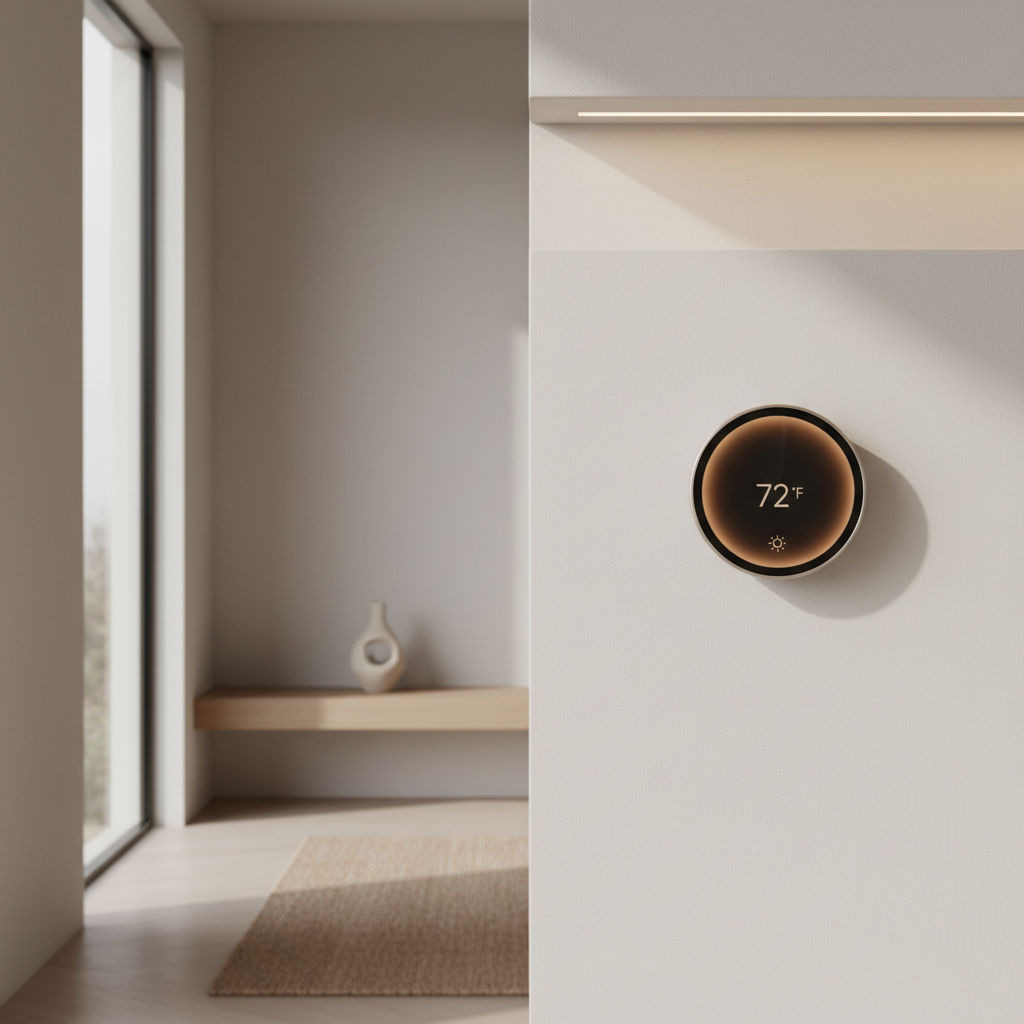
The little device on your wall controls half your home's energy use. So when was the last time you gave your thermostat a second thought?
A smart thermostat is one of the simplest, highest-ROI upgrades you can make. The EPA's Energy Star program found that proper use of a smart thermostat saves an average of 8% on heating and cooling — about $50 a year for most homes, and more for larger systems. Combined with professional installation and smart setup, savings of 10–23% are achievable.
In this guide, we cover how smart thermostats work, whether they're worth it, and how to choose the right one for your home.
What Makes a Thermostat "Smart"?
A traditional programmable thermostat follows a fixed schedule you set manually. A smart thermostat goes further — it adapts, learns, and responds to your life:
- Learning models observe your adjustments and build a schedule automatically
- Geofencing senses when you leave and dials back the temperature
- Remote access lets you control your home from a phone app anywhere
- Energy reports surface habits and waste you didn't know about
- Integration with Alexa, Google Assistant, and Apple HomeKit for voice control
- Humidity sensors that coordinate with your whole-home IAQ system
How Much Can You Save With a Smart Thermostat?
According to ENERGY STAR, a properly programmed smart thermostat saves an average of $50 per year. But that's just the baseline. Homes with larger systems, inconsistent schedules, or previously manual thermostats see much higher savings:
- 10% savings with basic scheduling (the minimum)
- 15–18% with learning models that adapt automatically
- 20–23% when paired with geofencing and remote setbacks
Most homeowners recoup the cost of a smart thermostat within two years. After that, it's pure savings — and a more comfortable home every day of the year.
Features That Actually Matter
Not every feature is worth paying for. Here's what genuinely impacts comfort and savings:
1. Learning Capability
The best models (Nest Learning Thermostat, Ecobee Premium) observe your preferences and build a schedule without manual programming. Set it once, and it adapts.
2. Remote Room Sensors
Ecobee and similar brands offer wireless room sensors that average temperatures across multiple rooms. This eliminates hot and cold spots — a game-changer for two-story homes.
3. Geofencing
Your phone's location triggers temperature changes when you leave or return. No more forgetting to set back the thermostat when you leave for work.
4. Energy Reports
Monthly summaries reveal exactly how much energy you used, when you used it, and how to save more. Awareness drives savings.
5. HVAC Compatibility Alerts
Top thermostats monitor your system's runtime and alert you to potential issues — early warnings that complement a preventive maintenance plan.
Is a Smart Thermostat Right for Every Home?
Most homes benefit, but a few situations need extra consideration:
- Heat pumps with multi-stage systems — need a thermostat that supports aux/emergency heat correctly
- Homes without a C-wire — may require an adapter or new wiring
- Older furnaces with proprietary thermostat protocols — sometimes need an adapter
- Very predictable schedules — if you're home all day, savings are smaller
This is why professional installation matters. We verify compatibility, run the C-wire if needed, configure staging and aux heat correctly, and set up the features that maximize savings from day one. Book installation to get it done right.
Installation: DIY vs. Professional
Big-box stores push DIY installation, but professional installation protects your equipment and your savings:
- C-wire installation — the common wire that powers smart thermostats safely
- Aux/emergency heat configuration for heat pump systems
- Multi-stage setup for variable-speed furnaces and ACs
- Zoning integration if you have multiple zones
- Correct sensor placement for accurate averaging
A misconfigured smart thermostat can actually increase energy use by short-cycling a multi-stage system. Professional setup ensures you save, not spend more.
Smart Thermostat + Preventive Maintenance = Maximum Savings
A smart thermostat optimizes your system's behavior, but it can't fix a dirty coil, low refrigerant, or a failing capacitor. Pair your thermostat with annual HVAC maintenance and you'll maximize both comfort and efficiency — while extending your equipment's life.
See also our guide on the early signs your AC needs repair to catch problems before they cost you.


