
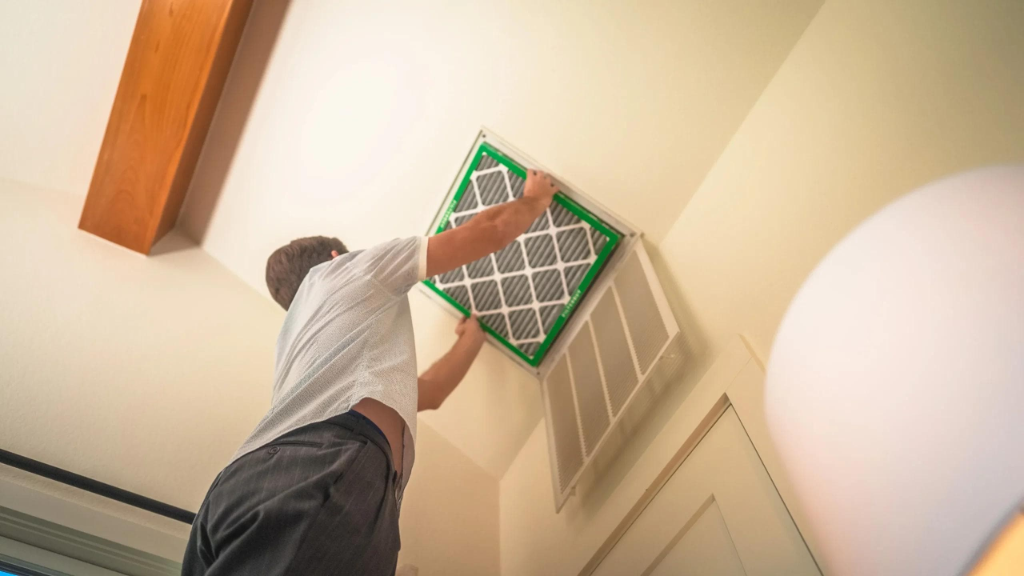
Of all the things you can do to protect your HVAC system, one costs about $10 and takes 30 seconds: changing the air filter. And yet, it's also the single most skipped maintenance task — one that quietly drives up energy bills, shortens equipment life, and degrades your home's indoor air quality.
So: how often should you change your air filter? The short answer is every 1 to 3 months. But the right answer depends on your filter type, household size, pets, allergies, and season. Here's the complete guide to getting it right.
The General Rule: Every 90 Days
For the average home — 2 adults, no pets, no smokers — an HVAC air filter should be replaced every 3 months (90 days). This keeps airflow unrestricted and your system running efficiently through a full season.
But "average" masks important exceptions. The rule changes depending on several factors.
How Home Factors Change Your Replacement Schedule
By Household Size and Pets
| Situation | Change Frequency | |-----------|-----------------| | One person, no pets | Every 90 days | | 2–3 people, no pets | Every 60–90 days | | 4+ people | Every 45–60 days | | One dog or cat | Every 45–60 days | | Multiple pets | Every 30 days | | Pet sheds heavily | Every 20–30 days |
Pet dander and shedding are the biggest accelerators — in summer when windows are closed, pet hair builds up fast.
By Season
Your filter works hardest during peak cooling and heating seasons:
- Summer (June–August): change monthly if you run AC continuously
- Winter (December–February): every 2 months during heating season
- Spring/Fall: stretch to 90 days during the "off" season
Special Circumstances
- Allergies or asthma: change every 30 days using a MERV 11–13 filter to capture pollen, dust mites, and mold spores. Also see our indoor air quality guide for whole-home solutions.
- Smokers: change every 30 days — smoke residue clogs filters and distributes odors through the home.
- Recent construction or renovation: change every 2 weeks until dust settles.
- Vacation home: change before and after long absences.
Air Filter Types and MERV Ratings
Not all filters are equal. The MERV (Minimum Efficiency Reporting Value) rating tells you how much it captures:
| MERV Rating | Captures | Lifespan | Pros | Cons | |-------------|----------|----------|------|------| | 1–4 (Fiberglass) | Large particles only | 30 days | Cheap, minimal airflow resistance | Filters almost nothing | | 5–8 (Pleated) | Dust, lint, pollen | 90 days | Balances cost and filtration | Misses fine particles | | 9–12 | Mold, pet dander, dust mites | 90 days | Good for allergies | Slightly restricts airflow | | 13–16 | Bacteria, smoke, viruses | 60–90 days | Best indoor air quality | Significantly restricts airflow | | HEPA | 99.97% of particles | 30–60 days | Maximum filtration | Not fit for standard HVAC; needs whole-home air purifier |
The sweet spot for most homes is MERV 8–11: it captures meaningful pollutants without overburdening your blower.
If you want premium filtration, a whole-home electronic air cleaner or media filter cabinet allows MERV 13+ without airflow restriction.
What Happens If You Don't Change Your Filter
Skipping replacements is the most expensive $10 mistake in your home:
- Frozen evaporator coil — restricted airflow = iced coil = no cooling
- Compressor burnout — running a system with a frozen coil destroys the compressor
- 40% efficiency loss — a clogged filter forces the system to work 40% harder
- Poor indoor air quality — pollutants recirculate instead of being captured
- Blower motor failure — the motor strains against the restriction and overheats
- Warranty void — manufacturer warranty claims require regular filter changes
Let's put a number on it. If skipping two $10 filters (saving $20) causes one compressor failure at $3,900, you've traded $20 for $3,900. The math is brutal.
When to Check, Not Just Replace
Often a dirty filter looks dirty and needs replacing — but exceptionally dirty air (renovation dust, wildfire smoke) can overload a filter faster than its schedule suggests. Check your filter monthly. If it's heavily coated when you look, it's time to change early.
How to Change Your Air Filter Correctly
Follow these steps:
- Turn off the system at the thermostat before opening the access panel
- Find your filter — usually at the return air grill or inside the furnace cabinet near the blower
- Note the size — printed on the frame edge (e.g. 16×20×1 in inches)
- Note the MERV rating and install a filter with the same MERV or lower (never higher without a professional airflow check)
- Insert the new filter with airflow arrows pointing toward the furnace/blower
- Restart the system and verify airflow at the registers
- Dispose of the old filter (not recyclable; it goes in household trash)
If you're ever unsure about size or MERV, your HVAC technician can confirm both during a tune-up. Many maintenance plans include filter replacements as part of the visit.
Get Started Today
That $10 air filter change right now will pay for itself before your next energy bill arrives. Between energy savings, avoided repairs, and better air quality, it's the highest-ROI thing you can do for your home. If it's been more than 90 days since your last change — grab a new filter now. For everything else, book a maintenance visit and we'll take care of the rest.


