
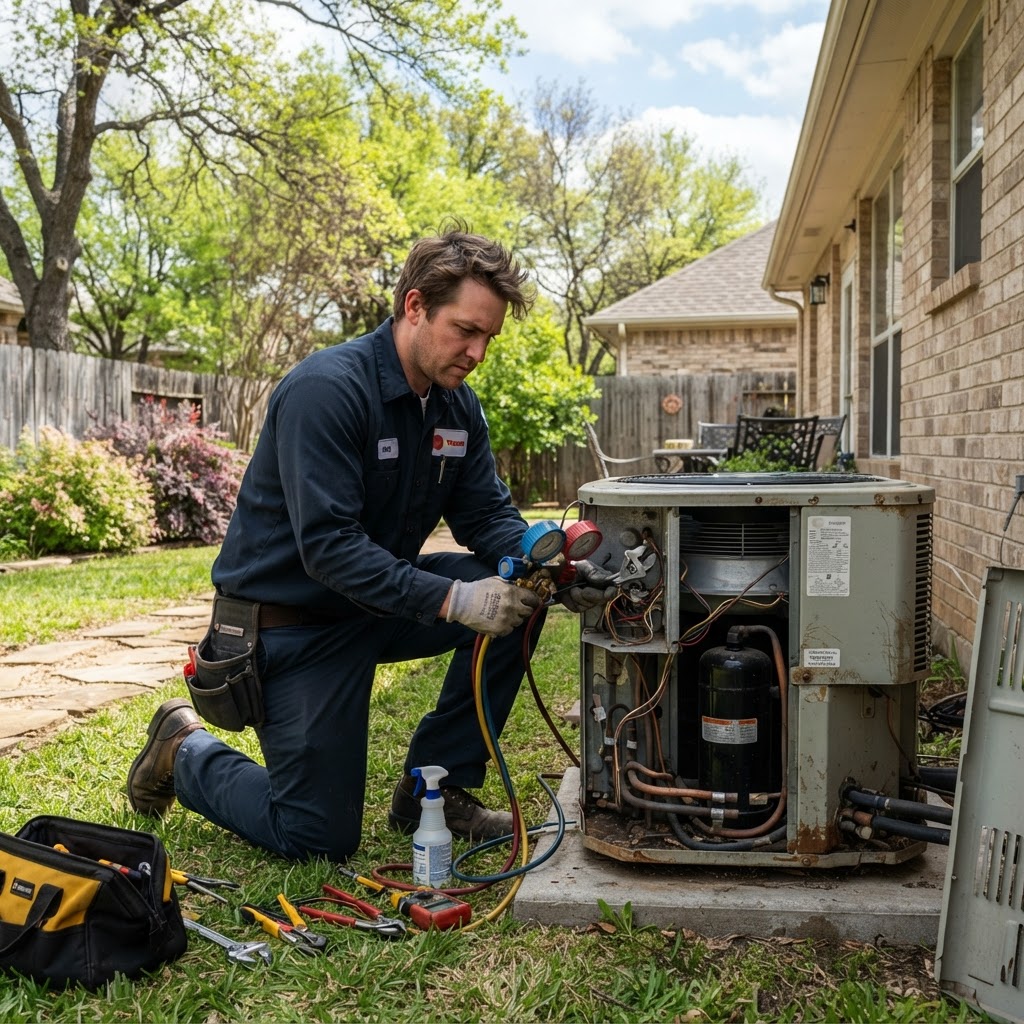
North Texas weather is famously unpredictable — 90°F in March, an ice storm in February, severe thunderstorms in spring, and 100°F+ stretches all summer. Your HVAC system is the only thing standing between your family and those extremes, and preparing it for each season prevents the breakdowns that always seem to happen on the worst-possible day. This guide covers preparing your HVAC for North Texas weather — what spring and fall tune-ups include, why they matter, and how seasonal prep saves you money and stress.
Why Seasonal HVAC Prep Matters in North Texas
North Texas's climate swings stress HVAC equipment in ways milder climates never see:
- Summer: sustained 95–105°F heat and humidity for months — maximum cooling load
- Winter: occasional hard freezes and ice storms — surprising heating demand
- Spring: severe thunderstorms, pollen, and temperature swings that foul equipment
- Fall: temperature transitions and the start of heating season
A system caught unprepared for any of these fails at the worst moment — a midsummer AC breakdown during a heat wave, or a furnace failure during a February ice storm. Seasonal tune-ups catch problems early, restore efficiency, and confirm the system is ready before the weather arrives.
The Spring AC Tune-Up: Preparing for Cooling Season
The spring tune-up is the most important maintenance visit of the year for North Texas homeowners. Schedule it before June — ideally March through May — so your system is ready before peak heat.
What a Professional Spring Tune-Up Includes
- Refrigerant charge verification — under- or over-charge strains the compressor and cuts efficiency
- Chemical coil cleaning — removes North Texas dust and pollen that coat the condenser and cut capacity up to 30%
- Evaporator coil inspection — checks for leaks, biological growth, and airflow
- Electrical component testing — capacitors, contactors, relays, and wiring; replaces weak parts before midsummer failure
- Condensate drain cleaning — clears algae and debris that trigger the safety float switch (the #1 cause of summer shutdowns in lakeside areas)
- Blower and airflow check — verifies proper CFM across the coil
- Thermostat calibration — ensures accurate temperature control
- Outdoor unit inspection — checks fan motor, fins, clearance, and pad
- Safety and performance test — confirms the system is ready for the North Texas summer
Homeowner Spring Prep Tasks
Before peak heat, do these yourself:
- Replace the air filter (start fresh for summer) — see our filter guide
- Clear 2 feet of clearance around the outdoor condenser
- Hose the condenser fins from the inside out
- Test the system early — run it on the first warm day to confirm it cools
- Set your thermostat to 78°F and program summer setbacks — see our thermostat settings guide
- Stock spare filters so you're ready for monthly summer changes
The Fall Heating Tune-Up: Preparing for Winter
North Texas winters are mild but punctuated by hard freezes. An unprepared furnace or heat pump can fail during a February cold snap — and those are exactly when repair demand spikes and same-day service is hardest to get. Schedule a fall tune-up in September through November.
What a Professional Fall Tune-Up Includes
- Heat exchanger inspection (gas furnaces) — cracks are a carbon monoxide risk and require immediate furnace replacement
- Ignition and flame sensor check — ensures reliable ignition
- Gas pressure and burner adjustment — verifies safe, efficient combustion
- Heating component test — confirms the system produces heat reliably
- Filter replacement or check — airflow matters for heating too
- Ductwork and airflow inspection — verifies even heat delivery
- Thermostat and staging check — especially for heat pumps and dual-fuel systems
- Safety and carbon monoxide check — critical for any combustion heating
Heat Pump Fall Prep
If you have a heat pump (see our heat pump vs furnace guide), the fall tune-up also confirms reversing valve operation, defrost cycle function, and aux-heat readiness — so the system transitions smoothly from cooling to heating.
Homeowner Fall Prep Tasks
- Replace the air filter before heating season
- Test the heating system on the first cool day — confirm it heats before a cold snap arrives
- Clear leaves and debris from around the outdoor unit (fall leaf drop is heavy)
- Switch the thermostat from cooling to heating mode and verify operation
- Check and replace carbon monoxide detector batteries if you have any gas appliances
- Program heating setbacks — 68°F when home and awake, 62–65°F when asleep or away
Severe Weather Prep: Storms and Extreme Cold
North Texas's severe weather events deserve specific prep:
Before Severe Thunderstorms
- Confirm the outdoor condenser is secured on its pad
- Clear loose items that could damage the unit in high wind
- Have flashlight and the AIRmazing emergency number ready: (214) 555-5555
Before a Hard Freeze or Ice Storm
- Confirm the heating system works before the freeze arrives
- Keep cabinet doors under sinks open to prevent pipe freezing
- Let faucets drip during the coldest hours
- Don't use the oven or grill for heating — carbon monoxide risk
- If you have a heat pump, leave it on — it's designed for this; switching to emergency heat can actually be less efficient
After a Power Outage
- If the AC or furnace won't restart, check breakers first
- Don't repeatedly reset a tripping breaker — call for service
- A surge protector on your HVAC system (installed by a pro) protects delicate electronics from outage-related surges
The Case for a Maintenance Plan
Two tune-ups per year — spring and fall — is the right cadence for North Texas. A maintenance plan makes it easy and adds value:
- Spring and fall tune-ups scheduled automatically
- Priority dispatch — jump the line during heat waves and cold snaps
- 15% repair discount on any needed repair
- No overtime fees for evening and weekend service
- Documented maintenance that preserves your manufacturer warranty
Read our full maintenance checklist for the complete picture.
Serving North Texas Homeowners
AIRmazing serves homeowners across North Texas — including Dallas, Frisco, Plano, McKinney, Denton, and the entire DFW metroplex.
Book Your Seasonal Tune-Up
Don't wait for a breakdown to prepare your HVAC for North Texas weather. Book a tune-up or call (214) 555-5555 — our NATE-certified technicians will have your system ready for whatever the season brings.


