
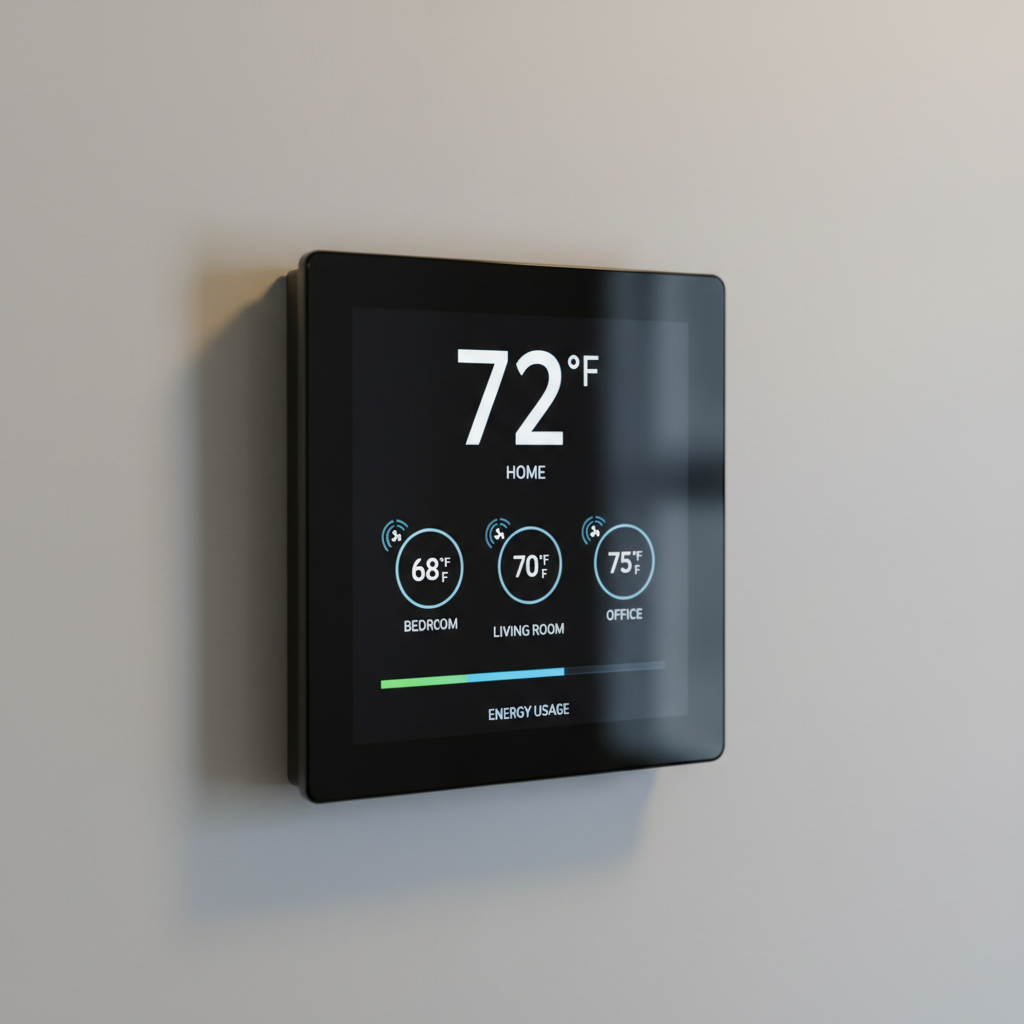
Most homes have a single thermostat controlling the temperature for the entire house. Set it to 72°F, and every room gets the same treatment — regardless of sun exposure, occupancy, or the fact that hot air rises.
An HVAC zoning system changes that. It divides your home into independent zones, each with its own thermostat and its own temperature. The result: more comfort, less waste, and an end to the eternal thermostat battle.
In this guide, we cover how HVAC zoning works, what it costs, and when it's worth the investment.
What Is an HVAC Zoning System?
A zoning system uses motorized dampers installed inside your ductwork to control airflow to different parts of your home. Each zone has its own thermostat. When a zone calls for heating or cooling, its damper opens and the system delivers conditioned air only to that zone. When the zone reaches setpoint, the damper closes.
A central control panel coordinates the dampers, the furnace or air handler, and the zone thermostats — ensuring the system runs efficiently and doesn't over-pressurize the ducts.
A typical zoned home has 2 to 4 zones — often split by floor (upstairs vs. downstairs), by wing (east vs. west), or by use (living areas vs. bedrooms).
How HVAC Zoning Works
Here's the cycle for a simple two-zone system:
- The upstairs thermostat calls for cooling
- The control panel opens the upstairs damper and closes the downstairs damper
- The AC runs and cools only the upstairs
- When the upstairs reaches setpoint, the damper closes
- If the downstairs later calls for cooling, the system switches zones
Modern zoning systems also use variable-speed blowers and modulating furnaces that adjust output to match the demand of the active zone — quieter operation and better efficiency than a single-stage system cycling on and off.
The Benefits of HVAC Zoning
1. Personalized Comfort
Different family members prefer different temperatures. Zoning lets the bedrooms stay cool for sleeping while the living room stays comfortable for daytime use. No more fighting over the thermostat.
2. Lower Energy Bills
Why cool or heat an empty guest room all day? Zoning delivers conditioned air only where it's needed — saving 20–30% on energy costs in well-designed systems.
3. Eliminates Hot and Cold Spots
Two-story homes notoriously struggle with temperature stratification — hot upstairs, cold downstairs. Zoning addresses this directly by giving each floor its own thermostat and airflow control.
4. Less Wear on Your Equipment
A zoned system runs shorter, more targeted cycles. That means less runtime, less strain, and longer equipment life — especially when paired with preventive maintenance.
5. Better Humidity Control
By running longer, lower-intensity cycles in the zone that needs it, zoning can improve dehumidification — a major comfort factor in southern climates. See our indoor air quality guide for more on humidity.
What HVAC Zoning Costs
Costs depend on the number of zones, your existing ductwork, and the control system you choose:
| System | Typical Cost | Best For | |--------|-------------|----------| | 2-zone retrofit (existing ducts) | $1,500–$3,500 | Two-story homes with one system | | 3-zone retrofit | $2,500–$5,000 | Larger homes, separate wing zoning | | 4+ zone system | $4,000–$8,000+ | Large or complex layouts | | New construction zoning | $2,000–$5,000 | Easier to install during build | | Smart zoning (wireless dampers) | $1,200–$3,000 | Retrofit without major ductwork |
The ROI is strongest in homes with clear temperature stratification (multi-story), large square footage, or homes with rooms that have very different heating/cooling loads (e.g., a sunroom, a finished basement, or a home office).
Ductless Mini-Splits: Zoning Without Ducts
If your home doesn't have ductwork — or you're adding zoning to a space without it — ductless mini-splits are the ultimate zoning solution. Each indoor unit is its own zone with its own thermostat, no dampers required.
See our comparison of ductless mini-splits vs. central AC to see if this approach fits your home.
Is HVAC Zoning Worth It for Your Home?
Zoning isn't for everyone. It's most valuable when:
- You have a two-story home with temperature differences between floors
- Your home is large (2,500+ sq ft) with rooms used at different times
- You have hot or cold spots that a single thermostat can't fix
- Different family members want different temperatures
- You're building new — zoning is far cheaper to install during construction
- You're replacing your HVAC system anyway — adding zoning at the same time reduces the marginal cost
Zoning is less compelling when:
- Your home is small and single-story with even temperatures
- You're home alone and use the whole house consistently
- Your existing ductwork is in poor condition or poorly designed
Smart Thermostats vs. Zoning: What's the Difference?
A smart thermostat with remote room sensors can average temperatures across multiple rooms — but it can't actually send more air to one room than another. It's a comfort improvement, but not true zoning.
True zoning requires motorized dampers in the ductwork (or multiple independent systems like mini-splits). If your hot and cold spots are severe, a smart thermostat alone won't fix them — you need zoning.
How to Get Zoning Right
The most common zoning mistakes come from poor design:
- Too many zones on a single-stage system cause short cycling and pressure issues
- Undersized dampers restrict airflow and strain the blower
- Incompatible thermostats that don't communicate with the control panel
- No bypass damper to handle excess pressure when only one zone is open
Professional design avoids these issues. A proper zoning installer will:
- Run a Manual J load calculation for each zone
- Size dampers and ductwork for each zone's demand
- Use variable-speed equipment or a bypass damper to manage pressure
- Match thermostats and controls for reliable communication
Book a consultation and we'll evaluate whether zoning makes sense for your home, what it would cost, and what to expect in comfort and savings.
The Verdict
HVAC zoning is one of the highest-impact upgrades for homes with temperature imbalances, multiple stories, or rooms used at different times. The investment is real — but the comfort and efficiency gains often pay for themselves within 5–7 years, and the daily comfort improvement is immediate.
If you're tired of the thermostat battle or your upstairs never quite cools down, zoning is worth a serious look.


