
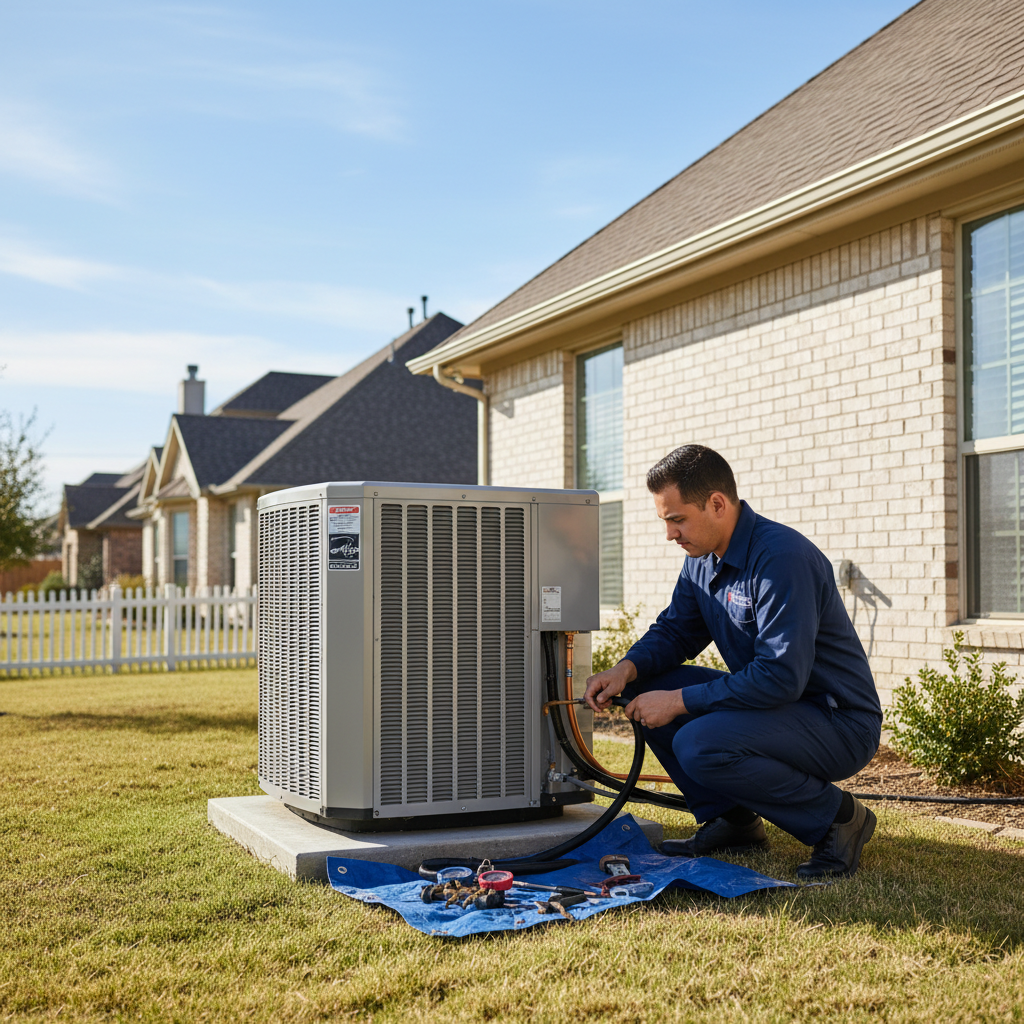
Every air conditioner has a expiration date. The question is: when to replace your AC instead of repairing it one more time? It's one of the most common questions homeowners ask — and one of the most expensive decisions to get wrong.
Repair too long, and you waste money propping up an inefficient system. Replace too early, and you spend thousands you didn't need to spend. This guide walks you through the 10 signs it's time for a new AC so you can make the right call with confidence.
1. Your AC Is More Than 10–15 Years Old
The average central air conditioner lasts 15 to 20 years with professional maintenance. Without maintenance, expect 10 to 12. If your system is in that range, you're in the replacement window — even if it still runs.
Older systems also use R-22 refrigerant, which was fully phased out in 2020. Recharging an R-22 system is expensive and increasingly hard to source. If your system takes R-22, replacement is almost always the better move. See our AC installation cost guide for what to expect.
2. Repair Bills Are Stacking Up
A capacitor here, a contactor there, a new blower motor — small repairs add up fast. The $5,000 rule is the simplest test: multiply your system's age by the estimated repair cost. If the result exceeds $5,000, replacement makes more economic sense.
Example: a 12-year-old system with a $600 repair equals $7,200 — well past the threshold. Put that repair money toward a new system instead.
3. Your Energy Bills Keep Climbing
An aging AC loses efficiency every year — even without obvious problems. Dirty coils, worn compressors, and outdated SEER ratings all contribute. If your energy bill has crept up 15–30% over the last few summers with no change in usage, your system is dying a slow death.
Modern systems reach 16–22 SEER, cutting cooling costs by 30–50% compared to a 10-year-old unit. Over a 15-year lifespan, those savings often exceed the cost of the new system.
4. Your System Uses R-22 Refrigerant
R-22 (Freon) was banned for new equipment in 2010 and production stopped entirely in 2020. If your AC was installed before 2010, it likely uses R-22 — and a refrigerant leak now costs $400–$800 per pound to recharge, if you can find it at all.
Upgrading to a modern system that uses R-410A or R-32 eliminates this problem permanently. See our guide on signs your AC needs repair for more on refrigerant leaks.
5. The System Short Cycles or Runs Constantly
Short cycling — turning on and off every few minutes — is a sign your system is struggling. It can mean low refrigerant, an oversized unit, or a failing compressor. Constant running without reaching setpoint means the system can't keep up.
Either way, the compressor takes the brunt of the abuse, and compressor failure is one of the most expensive repairs in HVAC. If your system short-cycles despite a clean filter and a tune-up, replacement is usually the next step.
6. Your Home Has Hot and Cold Spots
When one room is comfortable and another is 8 degrees warmer, your AC may be undersized, poorly ducted, or simply past its prime. Newer systems with variable-speed blowers and zoning deliver more even comfort than aging single-stage units.
Pair a new system with a smart thermostat and remote room sensors, and hot and cold spots often disappear entirely.
7. Strange Sounds or Smells Won't Go Away
Grinding, squealing, rattling, and buzzing all point to failing components — bearings, belts, contactors, or the compressor itself. Musty or burning smells suggest biological growth or electrical damage.
If your technician has addressed the same sound or smell more than once and it keeps returning, the system is on borrowed time. Stop paying to patch a dying system.
8. Your AC Uses Expensive Emergency Service Often
Breakdowns always happen at the worst time — the first 100-degree day, a holiday weekend, the night before guests arrive. If you've called for emergency service more than once in a single season, the pattern is clear.
A new system with a 10-year parts warranty and priority preventive maintenance removes that stress. No more overtime fees, no more sweating through July.
9. Your Home Comfort Doesn't Match the Thermostat
If you set the thermostat to 72°F and the house feels like 78°F, your system is losing the battle. Causes include low refrigerant, a dirty coil, leaky ducts, or an aging compressor that can't pressurize properly.
When a tune-up and a refrigerant charge don't restore the gap, your system has lost the capacity to keep up — and replacement is the next step.
10. Your System Is Out of Warranty
Most AC warranties cover parts for 10 years, sometimes longer. Once that window closes, every repair comes out of your pocket — and the cost of parts rises as they age out of production.
If your warranty has expired and a major component (compressor, coil, blower motor) fails, replacement is almost always cheaper than the repair plus the risk of the next failure.
How to Decide: Repair or Replace?
Use this framework:
- Under 8 years old, single repair under $500: Repair
- 8–12 years old, repair under $1,000: Repair, but start planning
- 12+ years old, any major repair: Replace
- R-22 system with any refrigerant issue: Replace
- Energy bills rising despite maintenance: Replace
- Multiple breakdowns in one season: Replace
When you're ready, our financing options make a new high-efficiency system affordable — often with monthly energy savings that offset the payment. Book a free estimate and we'll walk you through the decision with straight numbers and zero pressure.


