
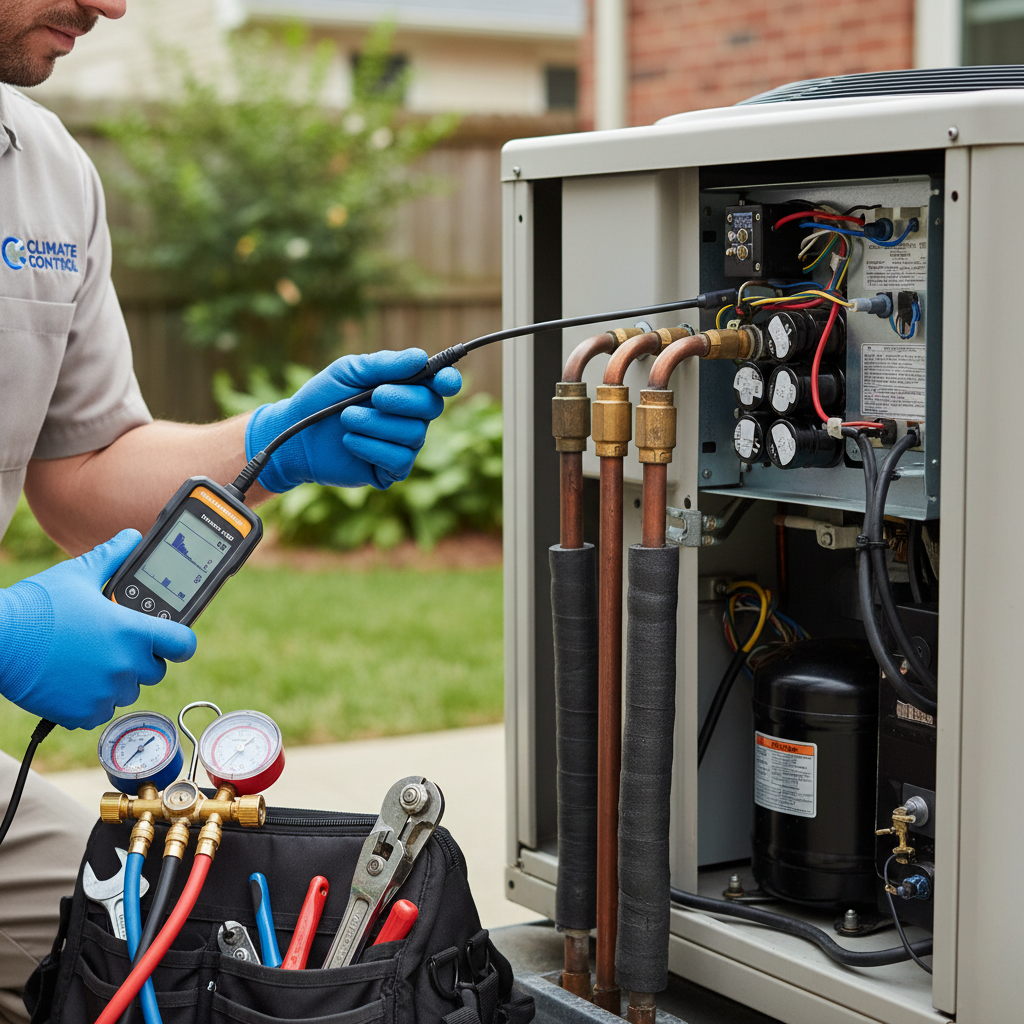
Your air conditioner doesn't "consume" refrigerant. It runs in a sealed loop — the same charge of refrigerant circulates for the life of the system. So if your refrigerant is low, you have a leak. And a leak is always a problem worth fixing promptly.
An AC refrigerant leak cuts cooling capacity, spikes energy bills, and can destroy the compressor if ignored. In this guide, we cover the causes, the warning signs, and what leak detection and repair actually cost.
How Refrigerant Works in Your AC
Refrigerant is the chemical compound that absorbs heat from your indoor air and releases it outside. It cycles continuously between your indoor evaporator coil (where it absorbs heat) and your outdoor condenser coil (where it releases it).
Because the system is sealed, refrigerant doesn't run out like fuel. The only reason for a low refrigerant charge is a leak somewhere in the copper lines, coils, or fittings. Recharging the system without fixing the leak is a temporary patch — the refrigerant will leak out again, and the compressor takes the damage each cycle.
Common Causes of AC Refrigerant Leaks
Refrigerant leaks don't happen randomly. They're caused by:
- Vibration and stress on copper lines over years of operation
- Formaldehyde and indoor pollutants corroding copper from the inside (a well-documented cause in newer homes)
- Manufacturing defects in coils — some brands had widespread evaporator coil leaks in the 2010s
- Physical damage during installation, landscaping, or severe weather
- Improper installation — under-torqued fittings or poor brazing
- Age — metal fatigue and corrosion over 10–15+ years of service
The most common leak location is the evaporator coil inside your indoor unit, followed by the outdoor condenser coil and the copper lines connecting them.
7 Signs You Have a Refrigerant Leak
1. Warm Air From the Vents
The clearest symptom. Without enough refrigerant, the system can't absorb heat from your home. The blower runs, but the air is lukewarm or room temperature.
2. Ice on the Refrigerant Lines or Evaporator Coil
Low refrigerant drops the coil temperature below freezing. Humidity in the air freezes on the coil — you may see ice on the copper lines outside or feel reduced airflow as the coil ices over.
3. Hissing or Bubbling Sounds
A small leak in the evaporator coil often produces a faint hissing. A larger leak in the lineset can bubble as refrigerant escapes. Both sounds warrant an immediate service call.
4. Longer Cooling Cycles
With less refrigerant, the system runs longer to reach setpoint. If your AC used to cool in 15 minutes and now takes 40, low charge is a likely cause.
5. Rising Energy Bills
A system running low on refrigerant can consume 20–40% more electricity for the same cooling output. Your bill climbs without any change in usage or weather.
6. High Humidity Indoors
Refrigerant doesn't just cool — it dehumidifies. A low charge removes less moisture, leaving your home feeling clammy even when the thermostat reads 72°F.
7. A Sweet or Chemical Smell
Some refrigerants have a faintly sweet odor. A noticeable chemical smell near the indoor unit can indicate a leak — one worth investigating promptly.
If you notice any of these, see our guide on the signs your AC needs repair and book a diagnostic.
How Refrigerant Leaks Are Detected
Finding a leak isn't always obvious. Professional technicians use several methods:
- Electronic leak detectors — handheld sensors that "sniff" for refrigerant gases
- UV dye injection — a fluorescent dye is added to the system and glows at the leak site under UV light
- Bubble solution — applied to suspected fittings to reveal escaping gas as bubbles
- Nitrogen pressure test — the system is pressurized with nitrogen to locate stubborn leaks
- Visual inspection — oil stains on coils or lines often mark a leak location
Accurate detection is critical. Recharging a system without fixing the leak guarantees a repeat failure — and another repair bill.
What Refrigerant Leak Repair Costs
Costs vary widely based on the leak location, refrigerant type, and repair approach:
| Repair Type | Typical Cost | Notes | |-------------|-------------|-------| | Recharge only (patch) | $200–$600 | Temporary; leak continues | | Small line leak repair + recharge | $400–$900 | Common, often worthwhile | | Evaporator coil leak repair | $600–$1,200 | Depends on coil accessibility | | Evaporator coil replacement | $1,200–$2,500 | For severe coil leaks | | Condenser coil replacement | $1,500–$3,000 | Often signals system replacement | | R-22 system recharge | $400–$800 per lb | R-22 phased out in 2020 |
For systems using R-22 (pre-2010 equipment), a refrigerant leak usually means replacement. R-22 is banned for new production, so recharges are scarce and expensive. See our guide on when to replace your AC for the decision framework.
For modern R-410A or R-32 systems, repair is usually the right call — unless the system is older than 10–12 years or has multiple leak sites.
Repair vs. Recharge: Don't Just Top It Off
Some contractors offer a "recharge" without repairing the leak. This is a red flag. Refrigerant doesn't evaporate — a low charge means a leak, and recharging without fixing it:
- Costs you money every season as refrigerant escapes again
- Damages the compressor by making it run with low charge
- Delays the real fix and risks a worse failure later
Always insist on leak detection before a recharge. A reputable technician will find the leak, show it to you, and recommend repair or replacement based on the location and your system's age.
How to Prevent Refrigerant Leaks
You can't prevent every leak, but you can reduce the risk:
- Schedule annual maintenance to catch corrosion and vibration early
- Keep the area around your outdoor condenser clear to prevent physical damage
- Replace your air filter regularly to avoid coil freezing — freezing stresses the coil and accelerates leaks
- Have your refrigerant charge checked during tune-ups; low charge is a leak warning
A well-maintained system can run 15–20 years without a major refrigerant leak. Neglected systems often leak within 8–10.
What to Do If You Suspect a Leak
Turn off the AC at the thermostat to prevent compressor damage, and book a diagnostic. Our technicians carry electronic leak detectors on every truck and can usually pinpoint the leak in a single visit. We'll show you exactly what's wrong, what it costs to fix, and whether repair or replacement makes more sense for your system's age and condition.


