
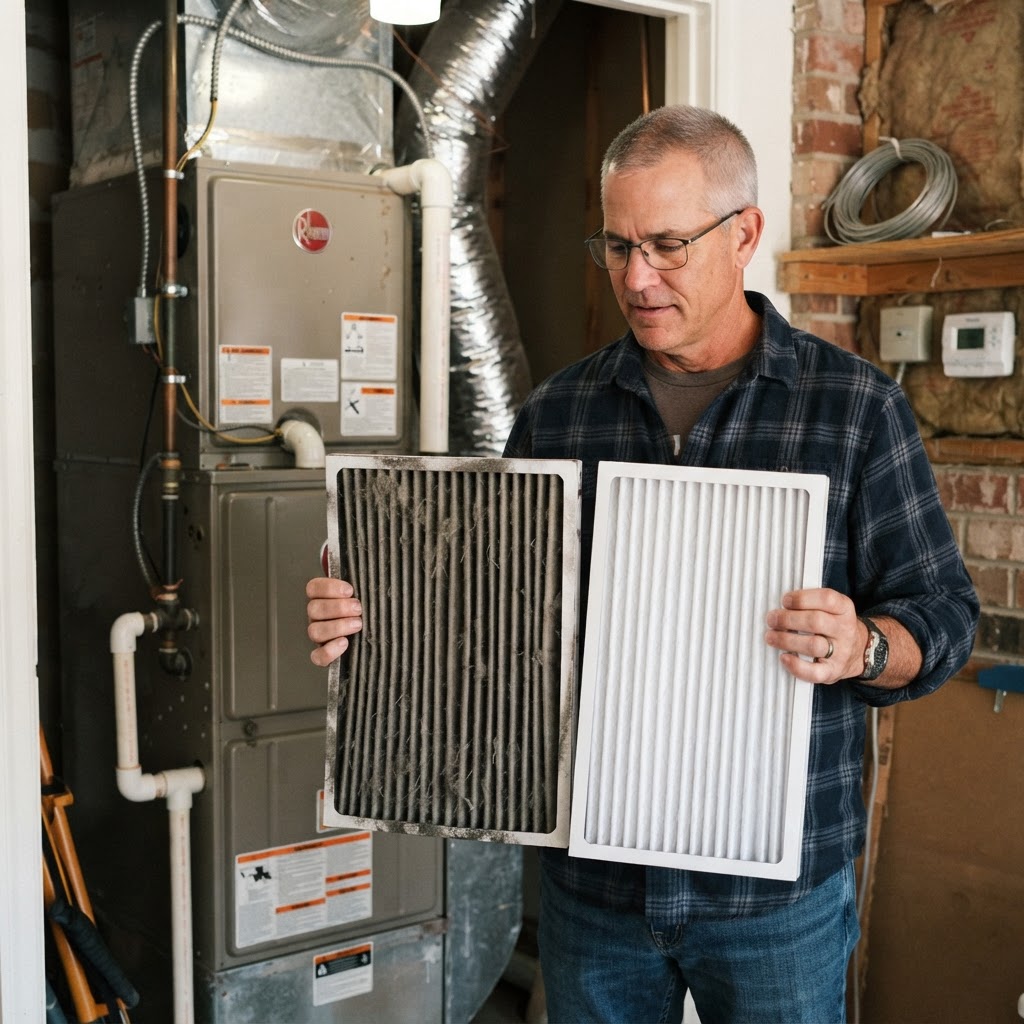
North Texas is beautiful — but for allergy sufferers, it's also one of the most challenging regions in the country. Cedar, oak, ragweed, and grass pollens arrive in waves; dust blows in from open land and construction; and summer humidity keeps indoor air clammy and prone to mold. The result: indoor air quality is a real concern for North Texas homeowners, and the right filtration, humidity control, and ventilation make a measurable difference in how your family feels. This guide covers indoor air quality in North Texas — the problems, the solutions, and how your HVAC system can help.
The North Texas Air Quality Challenge
Three factors make indoor air quality especially difficult in North Texas:
1. Heavy Pollen Load
North Texas has one of the longest and most intense allergy seasons in the country. Cedar peaks in winter, oak in spring, grass through summer, and ragweed in fall — with overlap meaning pollen is almost always present. Pollen infiltrates homes through open doors, leaky ducts, and HVAC intake, settling in ductwork and circulating every time the system runs.
2. Dust and Particulates
North Texas's open landscape, agriculture, and constant construction produce heavy dust — fine particulates (PM2.5) that penetrate deep into the lungs. Construction zones in fast-growing suburbs add silica and debris. Dust coats surfaces and accumulates in ductwork, recirculating through your home.
3. Humidity
Summer humidity in North Texas regularly exceeds 60%. High indoor humidity promotes mold and dust mites, makes the air feel sticky, and worsens allergy and asthma symptoms. Conversely, winter can drop humidity low enough to dry out sinuses and skin. Managing the balance is key.
How Your HVAC System Affects Air Quality
Your HVAC system is the largest single influence on your home's air quality because it filters and circulates all the air in your home many times per day. Key factors:
Air Filtration
The air filter is your first line of defense. A standard 1-inch fiberglass filter captures large particles but misses fine pollen, dust, and allergens. Upgrading filtration is the single biggest air-quality improvement most North Texas homeowners can make. See our filter guide.
Humidity Control
A properly sized AC dehumidifies as it cools. An oversized system short-cycles and leaves the air clammy. In some homes, a whole-home dehumidifier is the right solution for consistent humidity control year-round.
Duct Cleanliness
Ductwork accumulates dust, pollen, and biological growth over years. Leaky ducts pull in dusty attic or crawlspace air. Clean, sealed ductwork prevents recirculating contaminants. See our indoor air quality myths guide.
Ventilation
Tight, well-insulated modern North Texas homes trap stale air and indoor pollutants (cooking fumes, cleaning chemicals, VOCs). Mechanical ventilation — an energy recovery ventilator (ERV) or heat recovery ventilator (HRV) — brings in fresh, filtered air without wasting conditioned air.
Practical Solutions to Improve Indoor Air Quality
1. Upgrade Your Air Filtration
Match filtration to your needs and your system's capacity:
- MERV 8–11 — captures most pollen and dust; suitable for standard residential systems
- MERV 13–16 — captures fine particulates and bacteria; requires verifying your system can handle the airflow restriction
- HEPA — hospital-grade filtration; installed as a bypass system with its own fan
- Electronic air cleaners — capture very fine particles using electrostatic charge
AIRmazing can measure your system's static pressure and recommend filtration that improves air quality without choking airflow.
2. Control Humidity
Target 30–50% indoor relative humidity:
- A properly sized AC dehumidifies in summer — verify your system isn't oversized
- A whole-home dehumidifier handles stubborn humidity, especially in lakeside areas like Lewisville and The Colony
- A whole-home humidifier adds moisture in dry North Texas winters
- Monitor humidity with a hygrometer ($15–$30)
3. Add Air Purification
Beyond filtration, dedicated air purifiers tackle specific problems:
- UV-C light systems — kill mold, bacteria, and viruses at the coil and in the air stream
- Activated carbon — removes odors, VOCs, and chemical fumes
- PCO (photocatalytic oxidation) — breaks down contaminants at the molecular level
- Portable room purifiers — for targeted rooms (bedrooms, nurseries)
4. Clean and Seal Ductwork
If your home is 10+ years old, ductwork likely holds years of accumulated dust, pollen, and biological growth. Professional duct cleaning removes it; duct sealing prevents dusty attic air from being pulled in. Combine with a duct inspection every 3–5 years.
5. Add Mechanical Ventilation
For tight modern homes, an ERV or HRV provides controlled fresh air exchange, diluting indoor pollutants without wasting energy. This is increasingly important in new-construction North Texas homes.
6. Maintain Your HVAC System
A dirty evaporator coil grows mold and circulates spores. A clogged filter stops filtering. Annual maintenance — including coil cleaning and filter replacement — keeps your system improving air quality instead of degrading it. Read our maintenance checklist.
Signs Your Home Has an Air Quality Problem
- Frequent allergy or asthma symptoms indoors
- Dust accumulating quickly on surfaces
- Musty or stale odors from the vents
- Visible mold near vents or the indoor unit
- Clammy or overly dry air
- Family members with chronic coughs or congestion
- High indoor humidity (above 55%)
If any of these sound familiar, a professional indoor air quality assessment identifies the specific causes and solutions.
Serving North Texas Homeowners
AIRmazing serves homeowners across North Texas — including Dallas, Frisco, Plano, McKinney, Denton, and the entire DFW metroplex.
Breathe Easier at Home
If allergies, dust, or humidity are affecting your family, the right HVAC upgrades can make a real difference. Book an indoor air quality assessment or call (214) 555-5555 — our NATE-certified technicians will diagnose your home's specific challenges and recommend practical solutions.


