
For a homeowner, an AC breakdown is uncomfortable. For a business owner, it's a disaster. Restaurants lose inventory. Retail stores lose customers. Office workers go home early. Server rooms overheat and data is at risk. Commercial HVAC maintenance is the single most effective way to prevent that scenario.
In this guide, we cover what commercial HVAC maintenance includes, how it differs from residential service, and how to build a maintenance plan that protects your business.
Why Commercial HVAC Maintenance Matters More
Residential systems serve one family. Commercial systems serve dozens, hundreds, or thousands of people — plus inventory, equipment, and customers. The stakes are higher:
- Business interruption — a failed system can force a closure
- Inventory loss — restaurants, pharmacies, and grocery stores lose thousands per hour without cooling
- Employee productivity — studies show productivity drops 2% per degree above 77°F
- Customer experience — uncomfortable customers don't stay, and they don't come back
- Equipment damage — server rooms, medical equipment, and food storage all depend on controlled climate
- Liability — certain businesses (healthcare, food service) face regulatory fines for climate failures
A single afternoon closure can cost more than a year of maintenance. The math always favors prevention.
Commercial vs. Residential HVAC: What's Different?
Commercial HVAC isn't just bigger — it's a different category of equipment, with different maintenance needs:
| Factor | Residential | Commercial | |--------|-------------|------------| | System size | 1.5–5 tons | 5–100+ tons | | Equipment | Split or packaged | Rooftop units, VRF, chillers | | Complexity | Single-zone | Multi-zone, economizers, controls | | Maintenance | 2x/year | Monthly, quarterly, or seasonal | | Failure cost | Comfort | Revenue, inventory, liability | | Regulations | Minimal | ASHRAE, FDA, local codes |
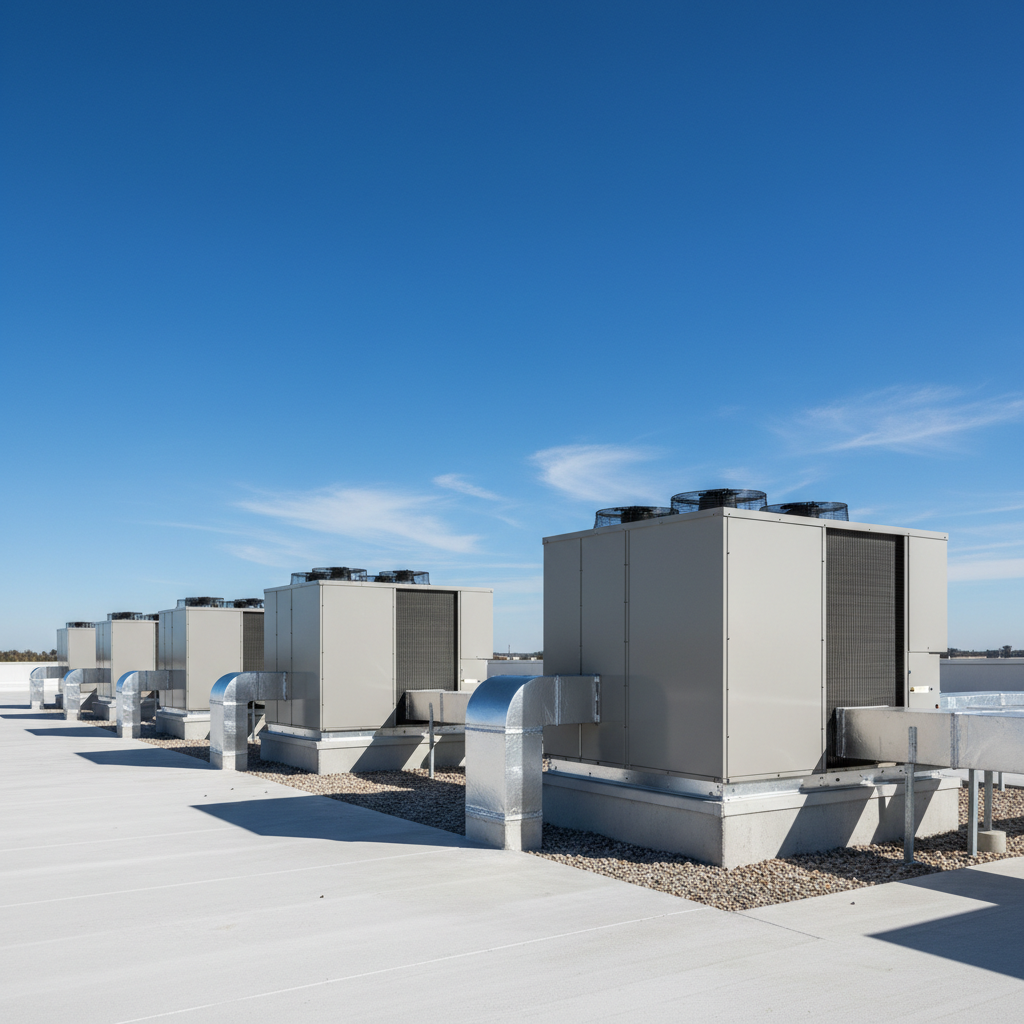
Commercial rooftop units (RTUs) combine heating, cooling, and ventilation in one cabinet. Their complexity — economizers, demand-controlled ventilation, multiple compressors — requires specialized knowledge that residential techs don't have.
What a Commercial HVAC Maintenance Visit Includes
A thorough commercial maintenance visit covers every component that keeps the system running efficiently. Our checklist includes:
Cooling System (Spring)
- Clean condenser and evaporator coils on all rooftop units
- Check and adjust refrigerant charge across all circuits
- Inspect and tighten electrical connections and contactors
- Test compressor amp draw and compare to nameplate
- Lubricate motors, bearings, and moving parts
- Clear condensate drains and verify pump operation
- Calibrate thermostats and building controls
- Inspect and replace economizer dampers and sensors
- Verify temperature split and airflow at all zones
Heating System (Fall)
- Inspect heat exchangers for cracks on gas-fired units
- Clean and adjust burners, ignition, and flame sensors
- Test safety controls, limits, and pressure switches
- Check gas pressure and combustion efficiency
- Inspect flue and ventilation paths
- Verify combustion air supply
- Test all zone dampers and actuators
Year-Round
- Filter replacement on schedule (often monthly in heavy-use facilities)
- Belt inspection and replacement on belt-driven blowers
- Bearing and motor health checks
- Building automation system (BAS) log review
- Energy consumption tracking and reporting
How Often Should Commercial HVAC Be Maintained?
The answer depends on your business type and system intensity:
- Light commercial (offices, retail): Twice a year (spring + fall) with quarterly filter changes
- Restaurants and food service: Quarterly minimum, monthly during peak season
- Healthcare and dental: Quarterly with strict documentation
- Data centers and server rooms: Monthly, plus continuous monitoring
- Industrial and manufacturing: Monthly during operation, plus seasonal deep service
When in doubt, more is better. The cost of an extra visit is a fraction of the cost of one breakdown.
The Cost of Skipping Commercial Maintenance
Neglect catches up fast on commercial equipment. Here's what we see when maintenance is skipped:
- 25–40% higher energy bills from dirty coils, low refrigerant, and worn components
- Premature compressor failure — a $4,000–$12,000 cost per rooftop unit
- Lost inventory — a single refrigeration failure can ruin $10,000+ of product in hours
- Business closure — even a half-day closure costs thousands in lost revenue
- Voided warranties — most commercial equipment warranties require documented maintenance
- Occupant complaints and turnover — unhappy tenants and employees cost money
The return on commercial maintenance is one of the highest in business operations. Most programs pay for themselves in energy savings alone within the first year.
Building a Commercial Maintenance Plan
A well-designed commercial maintenance plan should include:
- Scheduled visits matched to your business intensity
- Filter and belt replacement on a documented schedule
- Priority emergency response — same-day or after-hours dispatch when needed
- Discounted parts and labor on repairs
- Detailed service reports after every visit (documentation for warranties and compliance)
- Energy tracking to prove the ROI of the program
- Capital planning guidance — knowing when to repair, replace, or budget for major equipment
Our commercial plans are built around your business operations, not a one-size-fits-all template. We work with restaurants, retail, offices, healthcare, and industrial facilities across Texas and surrounding states.
Signs Your Commercial System Needs Attention
Don't wait for the next scheduled visit if you notice:
- Uneven temperatures between zones or floors
- Unusual sounds from rooftop units (grinding, rattling, squealing)
- Rising energy bills without a usage change
- Musty or burning odors from supply air
- Ice forming on refrigerant lines or coils
- Frequent error codes on the building automation system
- Comfort complaints from employees or customers
Address these early. A 30-minute service call today prevents a 4-hour emergency tomorrow.
Get a Commercial HVAC Maintenance Quote
Your business depends on climate control — and your customers, employees, and inventory depend on it working. If you're ready to stop reacting to breakdowns and start preventing them, book a commercial assessment. We'll evaluate your equipment, document its condition, and build a maintenance plan that fits your operations and your budget.


